
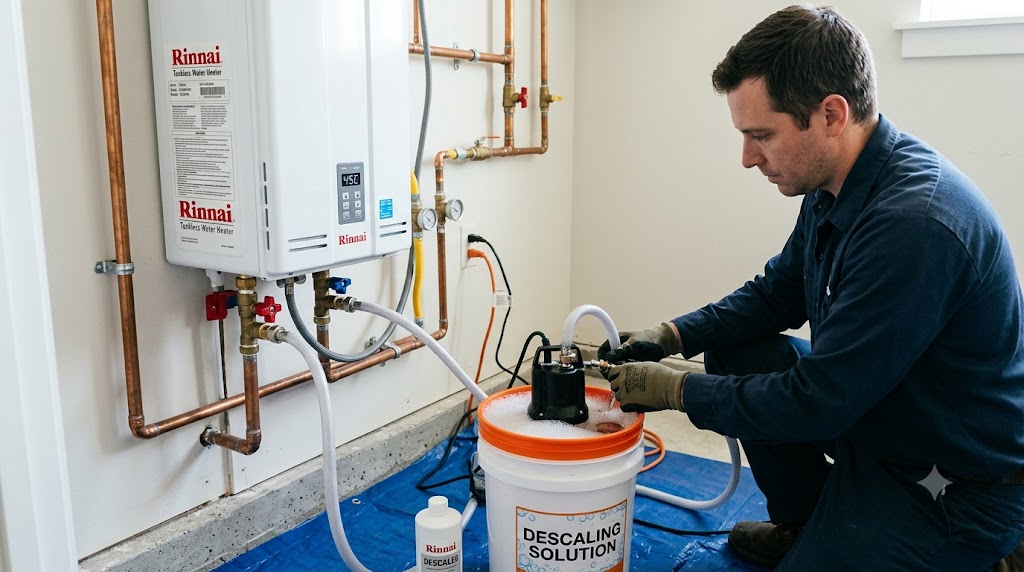
Noticing your Rinnai tankless water heater is delivering slightly cooler water than it used to, or hearing an unusual noise during operation, is often a sign that mineral scale has built up on the heat exchanger and it’s time for a descaling session. This is a manageable DIY task for most homeowners with basic tools.
Descaling a Rinnai tankless water heater involves isolating the unit using its service valves, connecting a descaling pump to circulate a cleaning solution through the heat exchanger for roughly 45 minutes to an hour, then flushing the system with clean water before returning it to normal operation. Rinnai recommends this be done annually for most households, more often in hard water areas.
What You’ll Need
A descaling pump kit (widely available, often sold specifically for tankless water heater maintenance), a descaling solution (either a commercial product made for this purpose or food-grade white vinegar, diluted per manufacturer guidance), a bucket, and basic hand tools to access the unit’s service valves.
Step 1: Turn Off Power and Gas
Before doing anything else, turn off the unit’s power supply and shut off the gas supply valve. This is a basic safety step that should never be skipped.
Step 2: Close the Water Isolation Valves
Rinnai units include hot and cold water isolation valves specifically for maintenance purposes. Close both valves to isolate the unit from your home’s main water supply before connecting the descaling pump.
Step 3: Connect the Descaling Pump
Connect the pump’s hoses to the unit’s service ports, generally one hose to the cold water service port and one to the hot water service port, following your specific pump kit’s instructions and your unit’s manual for correct port identification.
Step 4: Circulate the Descaling Solution
Fill the pump’s reservoir with your descaling solution and run the pump to circulate it through the heat exchanger for approximately 45 minutes to an hour. This dwell time allows the solution to dissolve mineral scale buildup on the heat exchanger surfaces.
Step 5: Flush With Clean Water
After the circulation period, disconnect the descaling solution and flush the system with clean water for several minutes to fully clear any remaining solution from the unit before returning it to service.
Step 6: Reopen Valves and Restore Power
Once flushing is complete, disconnect the descaling pump, reopen the hot and cold water isolation valves, restore gas supply, and turn the power back on. Run a hot water tap to confirm normal operation before considering the job complete.
Signs You Need to Descale Sooner Than Scheduled
Reduced hot water temperature or flow, unusual operating noises, or specific error codes related to flow restriction or overheating can all indicate scale buildup is affecting performance ahead of your regular annual schedule. See our guide on [common problems and fixes] for more on interpreting these signs.
When to Call a Professional Instead
If you’re not comfortable working with the unit’s water isolation valves, gas supply, or electrical connections, or if you notice anything unusual during the process like leaks or unexpected error codes, stop and call a licensed professional rather than continuing on your own.
Rinnai RXP199iN Condensing Tankless Water Heater with Built-In Recirculation Pump - View on Amazon
The Bottom Line
Descaling a Rinnai tankless water heater is a manageable DIY task involving isolating the unit, circulating a descaling solution through the heat exchanger for about an hour, and flushing before restoring normal operation. Doing this annually protects your unit’s efficiency and lifespan.
Frequently Asked Questions
How long does descaling a tankless water heater take? The full process, including setup, circulation, and flushing, typically takes about one to two hours for most homeowners doing it themselves.
What solution should I use to descale my Rinnai unit? A commercial descaling solution made for tankless water heaters or a diluted food-grade white vinegar solution, following manufacturer guidance for concentration.
Do I need a special pump to descale my water heater? Yes, a descaling pump kit is needed to circulate the solution through the unit’s heat exchanger, these are widely available and made specifically for this purpose.
Can I descale my Rinnai unit without turning off the gas? No, turning off both power and gas supply is a necessary safety step before beginning any descaling maintenance.
How often should I repeat this descaling process? Rinnai recommends annual descaling for most households, with more frequent descaling recommended in hard water areas.
What are the service valves I need to use? These are dedicated hot and cold water isolation valves built into the unit specifically for maintenance tasks like descaling.
Is it normal to see discolored water when flushing? Some discoloration during the flush stage can be normal as dissolved mineral scale clears from the system, but persistent discoloration is worth investigating further.
What if I notice a leak during the descaling process? Stop immediately, address the leak, and consider calling a licensed professional if you’re unsure of the cause or how to resolve it safely.
Can descaling fix reduced hot water performance? Often yes, if the reduced performance was caused by mineral scale buildup on the heat exchanger, descaling can restore normal function.
Should I descale even if I haven’t noticed any performance issues? Yes, following the recommended annual schedule proactively helps prevent scale buildup from reaching a point where it affects performance or lifespan.
References
- Rinnai official maintenance and descaling guidance, accessed July 2026: https://www.rinnai.us
- Rinnai official product specifications for the RXP199iN, accessed July 2026: https://www.amazon.com/s?k=Rinnai+RXP199iN