
Real numbers from real homeowners tell a much wider story than any single quote: a Reddit user reported being quoted $8,709 for a gas tank-to-tankless conversion, another asked if $5,250 was reasonable for a straight tankless replacement, and a Bogleheads forum post described a $3,168 job versus an $11,000 competing bid for the same work. That spread is the honest starting point for any tankless installation guide.
Installing a Rinnai condensing tankless water heater like the RXP199iN or RX199iN typically costs $2,500 to $9,000 total installed, based on real homeowner-reported figures and Endless Energy’s own published range of $5,999 to $9,000, depending heavily on whether you’re converting from a tank system (requiring larger gas line work) or replacing an existing tankless unit (often cheaper since infrastructure is already in place). The unit price itself, roughly $1,500 to $1,800 for units in this capacity class, is only part of the total cost equation.
Why the Cost Range Is So Wide
A Reddit user in r/askaplumber specifically noted that “a tankless water heater requires a larger gas line to be installed from the gas meter” when converting from a traditional tank system, and that “tankless projects usually run $6-8k on average” for this type of first-time conversion. This matches the higher end of the range seen across multiple real quotes.
By contrast, a Facebook post from a homeowner in Oxford, Mississippi described paying just $2,500 in 2012 for their Rinnai installation, though pricing has increased since then due to inflation, and the exact scope of that job (whether gas line and venting work was already in place) isn’t fully detailed in that post.
What Drives Installation Cost Up
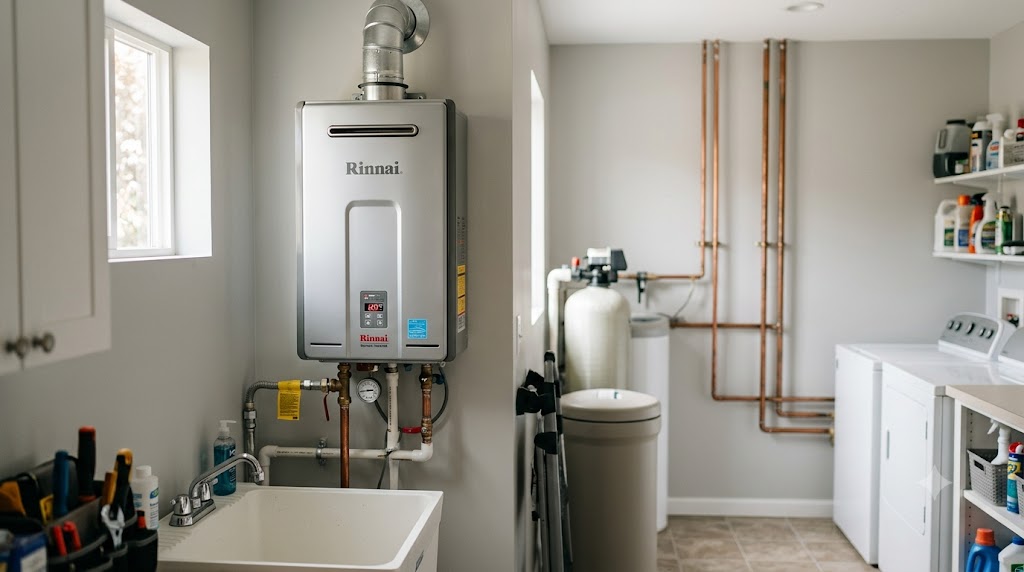
Gas line sizing is one of the biggest cost drivers. Tankless units, especially high-capacity condensing models like the RXP199iN or NPE-240A2 at 199,000+ BTU, often require a larger gas line than what fed a traditional tank system, sometimes necessitating a full new line run from the meter.
Venting requirements add real cost too. Rinnai’s own marketing material specifically addresses this directly, stating “venting is too expensive on tankless water heaters” as a myth they’ve worked to address, acknowledging it’s a genuine common concern among buyers evaluating installation costs.
Whether you’re converting from a tank or replacing an existing tankless unit matters enormously. If proper venting and adequately sized gas lines are already in place from a previous tankless installation, your cost will land much closer to the lower end of the range, since you’re avoiding the biggest cost drivers entirely.
A Real Cost Comparison Example
The Bogleheads forum post referenced above described a homeowner receiving one bid at $11,000 for a full replacement, then finding another contractor who completed the same scope of work, “$3,168 for tankless, gas work, and labor” reflecting a nearly 3.5x difference for what appears to be comparable work. This underscores just how much installation quotes can vary by contractor, region, and negotiating position, making it worth getting multiple quotes before committing.
Steps in a Typical Installation
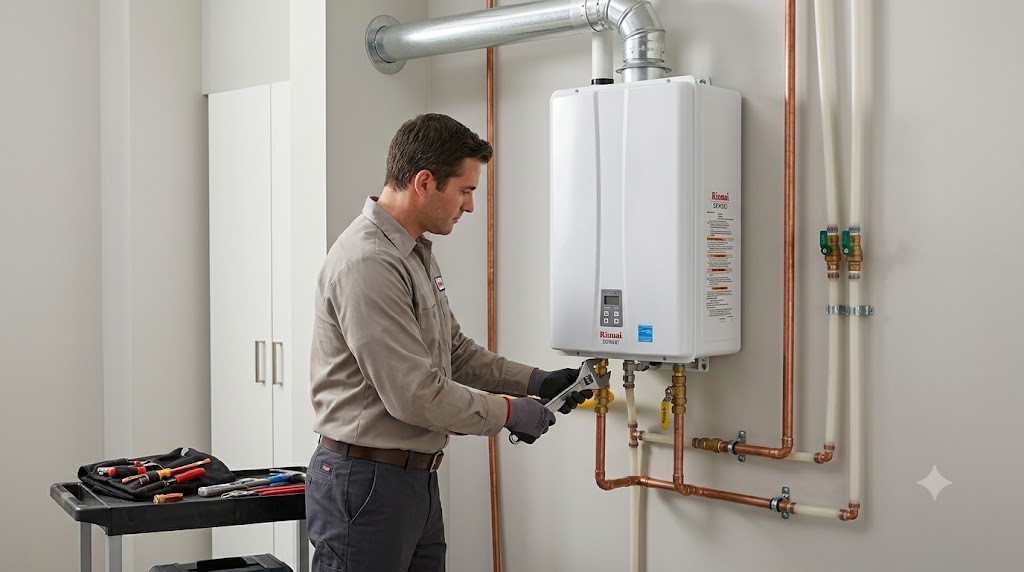
Based on general Rinnai installation guidance and real homeowner accounts, a typical installation involves: removing the old unit (tank or tankless), confirming or upgrading gas line sizing to match the new unit’s BTU demand, installing appropriate PVC venting for condensing units specifically, connecting water lines (often with new isolation valves for future maintenance), and completing electrical connections for the unit’s control system and any recirculation pump if included.
How to Get a Fair Quote
Given the wide cost range documented across real homeowner reports, get at least two to three quotes before committing, and ask each contractor to specifically itemize gas line work, venting, and labor separately so you can compare apples to apples. If you’re converting from a tank system, ask directly whether your existing gas line will need to be upsized, this single factor appears to be the biggest driver of cost variation across the real reports referenced here.
For the complete breakdown of what a tankless unit itself costs before installation, see our full price guide.
Rinnai RXP199iN Condensing Tankless Water Heater with Built-In Recirculation Pump - View on Amazon
The Bottom Line
Real installation costs for a Rinnai condensing tankless water heater range widely, from roughly $2,500 to $9,000 depending on whether you’re converting from a tank system or replacing an existing tankless unit. Get multiple itemized quotes, and specifically ask about gas line and venting requirements, since these are the biggest documented cost drivers.
Frequently Asked Questions
How much does it cost to install a Rinnai tankless water heater? Based on real homeowner reports and Endless Energy’s published data, total installed cost typically ranges from $2,500 to $9,000, depending heavily on whether gas line and venting work is already in place.
Why is tankless installation so much more expensive when converting from a tank? Tank-to-tankless conversions often require installing a larger gas line from the meter to support the tankless unit’s higher BTU demand, a significant cost driver not present when simply replacing an existing tankless unit.
Is $5,000 or more a normal price for tankless installation? Based on real reported figures ranging from $5,250 to $9,000 for various installations, yes, this falls within a documented normal range, particularly for tank-to-tankless conversions.
Why do installation quotes vary so much between contractors? Real examples show quotes for comparable work varying by more than 3x between contractors, reflecting differences in regional labor rates, business overhead, and how thoroughly a contractor scopes the job.
Does replacing an existing tankless unit cost less than converting from a tank? Generally yes, since gas line sizing and venting infrastructure are often already in place from the previous tankless installation, avoiding the biggest cost drivers of a first-time conversion.
What’s included in a typical tankless installation quote? Unit removal, gas line confirmation or upsizing, PVC venting installation for condensing units, water line connections, and electrical work for the control system and any included recirculation pump.
Should I get multiple quotes before installing a tankless water heater? Yes, given the wide documented cost variation for comparable work, getting at least two to three itemized quotes is a reasonable and financially smart step before committing.
Does venting really add significant cost to tankless installation? It can, though Rinnai’s own marketing addresses this concern directly, and costs vary based on your specific venting run length and configuration needs.
What should I ask a contractor before hiring them for tankless installation? Ask specifically whether your existing gas line needs to be upsized, what venting work is required, and request an itemized quote breaking down unit cost, labor, gas line work, and venting separately.
Is DIY installation of a Rinnai tankless water heater realistic? Given the gas line, venting, and electrical work involved, this is generally a job for licensed professionals, and most manufacturers and installers recommend professional installation for warranty and safety reasons.
References
- Reddit r/askaplumber community discussion of real tankless water heater installation quotes, accessed July 2026
- Endless Energy, “The 2025 Cost of Tankless Water Heaters in Massachusetts,” accessed July 2026: https://goendlessenergy.com
- Bogleheads Investing forum discussion of real comparative tankless installation quotes, accessed July 2026
- Rinnai official installation cost guidance, accessed July 2026: https://www.rinnai.us