
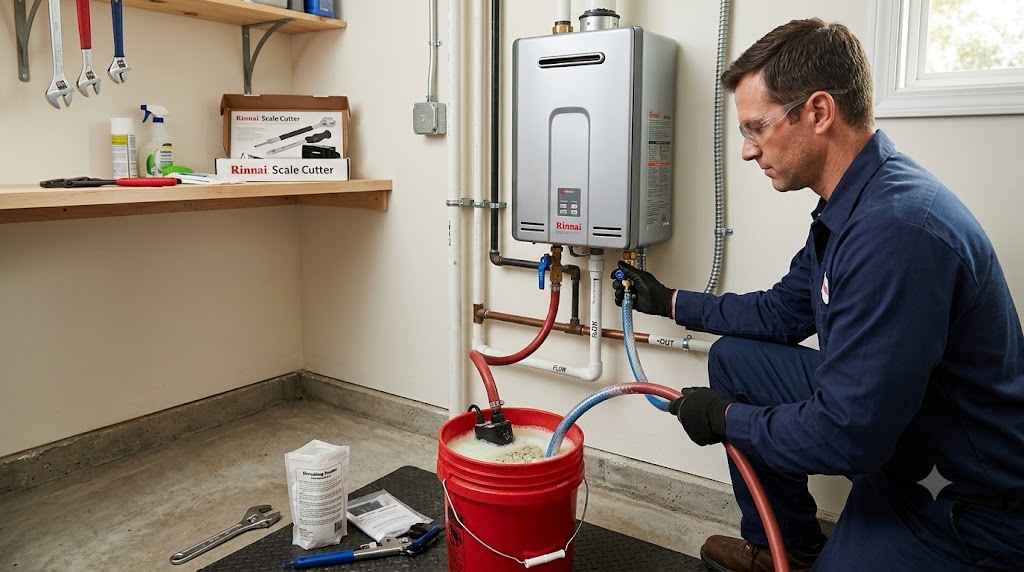
Standing in front of a shelf of water heater maintenance products, or scrolling through search results, it’s easy to feel unsure which descaling kit actually works for a Rinnai condensing tankless unit versus a generic product that isn’t really designed for the job. Here’s what actually matters when choosing one.
A proper descaling kit for a Rinnai tankless water heater needs a circulation pump capable of running solution through the unit’s service valves, hoses that connect to those valves, and a descaling solution safe for use with condensing heat exchangers, most commonly a food-grade citric acid or vinegar-based solution. Getting these three components right matters more than any specific brand name.
What to Look For in a Descaling Pump
The pump itself needs enough flow capacity to properly circulate solution through the heat exchanger for the recommended dwell time, generally 45 minutes to an hour. Look for a pump kit specifically marketed for tankless water heater descaling rather than a generic small pump, since these kits typically include the correctly sized hoses and connectors for standard water heater service valves.
Choosing a Descaling Solution
Food-grade descaling solutions, whether a commercial product formulated for tankless water heaters or diluted white vinegar, are generally considered safe for use with condensing heat exchangers when used according to manufacturer dilution guidance. Avoid harsh industrial descaling chemicals not specifically rated safe for potable water system components, since these can damage internal components not designed for stronger chemical exposure.
Reusable Kit vs Single-Use Solution
Some kits are designed for repeated annual use, with a durable pump and reusable hoses where you simply purchase replacement solution each year. Others are more disposable, single-use setups. For homeowners planning to do their own annual descaling long-term, a reusable kit is generally the more practical and cost-effective choice over time.
Compatibility With Rinnai’s Service Valves
Confirm any kit you’re considering includes hose connectors compatible with Rinnai’s standard service valve fittings, or be prepared to source compatible adapters separately. Most kits marketed generally for tankless water heater descaling are designed to work across major brands including Rinnai, but it’s worth double checking before purchasing if you’re unsure.
DIY Kit vs Professional Descaling Service
A DIY kit is a reasonable investment if you’re comfortable handling the process described in our [descaling how-to guide], and pays for itself over a few years of annual use compared to paying a professional each time. If you’d rather not handle the process yourself, professional descaling services are also widely available and handle the entire process for you.
Rinnai RXP199iN Condensing Tankless Water Heater with Built-In Recirculation Pump - View on Amazon
The Bottom Line
A proper Rinnai descaling kit needs an adequately powered circulation pump, correctly sized hoses for standard service valves, and a food-safe descaling solution. A reusable kit is generally the more cost-effective choice for homeowners planning to handle their own annual maintenance long-term.
Frequently Asked Questions
What do I need in a descaling kit for my Rinnai tankless water heater? A circulation pump with adequate flow capacity, hoses compatible with the unit’s service valves, and a food-safe descaling solution like citric acid or diluted vinegar.
Can I use vinegar instead of a commercial descaling solution? Yes, food-grade white vinegar, properly diluted per guidance, is a commonly used and effective descaling solution for tankless water heaters.
Are all descaling kits compatible with Rinnai units? Most kits marketed generally for tankless water heater descaling work across major brands including Rinnai, but confirm service valve compatibility before purchasing.
Is a reusable descaling kit worth it over disposable options? Generally yes, for homeowners planning annual DIY descaling long-term, a reusable pump and hose kit pays for itself over a few years of use.
Can I damage my unit with the wrong descaling solution? Yes, harsh industrial chemicals not rated safe for potable water systems can damage internal components, stick to food-grade solutions designed for this purpose.
How much flow capacity does a descaling pump need? Enough to properly circulate solution through the heat exchanger for the recommended dwell time, generally 45 minutes to an hour, check your specific kit’s rated flow.
Do descaling kits come with the hoses I need? Most kits marketed specifically for tankless water heater descaling include correctly sized hoses and connectors for standard service valves.
Is professional descaling better than a DIY kit? Not necessarily better, but it removes the effort from you, a DIY kit is a reasonable and often more cost-effective option for those comfortable doing it themselves.
How often will I need to buy replacement descaling solution? Generally once per year if following Rinnai’s recommended annual descaling schedule, more often in hard water areas requiring more frequent maintenance.
Where can I find compatible service valve adapters if my kit doesn’t include them? Check with your kit’s manufacturer or a plumbing supply retailer for adapters compatible with Rinnai’s standard service valve fittings.
References
- Rinnai official maintenance and descaling guidance, accessed July 2026: https://www.rinnai.us
- Rinnai official product specifications for the RXP199iN, accessed July 2026: https://www.amazon.com/s?k=Rinnai+RXP199iN