
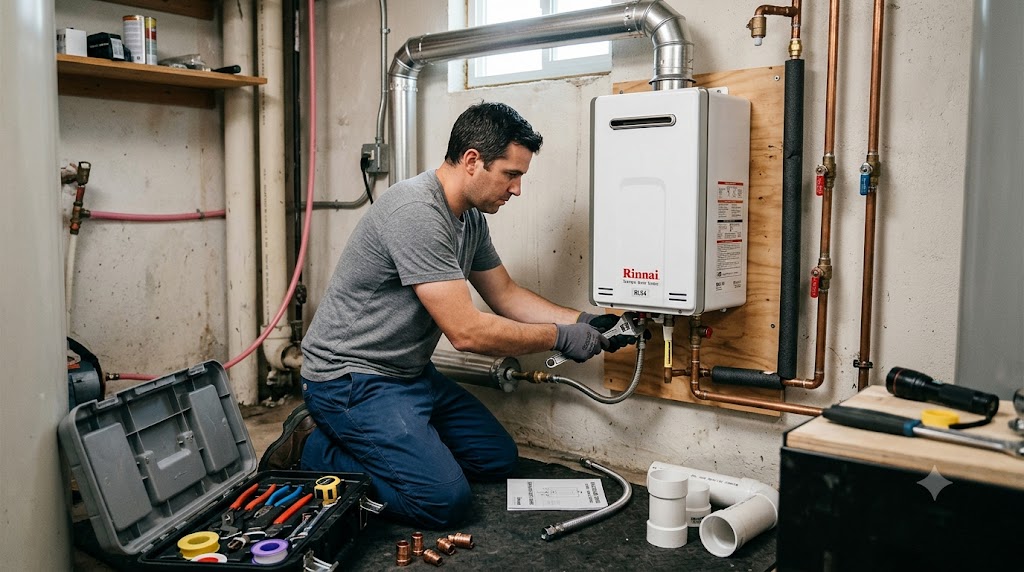
A homeowner comfortable with basic plumbing repairs looks at a tankless water heater installation quote and wonders if this is a project they could tackle themselves and save a few thousand dollars. It’s a fair question, and the honest answer has more nuance than a simple yes or no.
DIY installation of a Rinnai condensing tankless water heater like the RXP199iN is technically possible for someone with strong plumbing, gas, and electrical experience, but most manufacturers require professional installation to maintain warranty coverage, and the gas and venting work involved carries real safety risk if done incorrectly. For most homeowners, professional installation remains the safer and more practical choice.
What DIY Installation Actually Involves
Installing a condensing tankless water heater isn’t like swapping a faucet. It involves gas line connection and sizing verification, PVC venting installation routed to the exterior of the home, condensate drain line installation (since condensing units produce acidic condensate that needs proper drainage), electrical connection for the unit’s control system, and water line connections with isolation valves for future servicing.
Each of these steps has real failure modes if done incorrectly, and gas and venting mistakes specifically carry safety risk beyond just inconvenience.
The Warranty Problem
Check your specific unit’s warranty terms carefully. Many manufacturers, including Rinnai historically, require installation by a licensed professional for full warranty coverage. A DIY installation that later develops a covered defect could leave you without warranty support if the manufacturer determines installation wasn’t performed to code by a qualified installer.
This is worth confirming directly with Rinnai or your retailer before deciding, since warranty terms can change between models and over time.
Permit Requirements
Most jurisdictions require a permit for gas appliance installation, and permitted work typically requires inspection by a local authority. DIY installers need to research their specific local requirements, pull the appropriate permits, and schedule inspections, adding complexity beyond the physical installation work itself.
Skipping permits isn’t just a compliance issue, it can also create problems later when selling your home, since unpermitted gas work often surfaces during a home inspection.
Who Might Reasonably Consider DIY Installation
Someone with genuine hands-on experience with gas line work, PVC venting, and home electrical systems, who has confirmed their local permit and inspection requirements, and who has verified their specific unit’s warranty terms regarding self-installation, might reasonably take this on. This is a meaningfully smaller group than homeowners who are simply comfortable with general home improvement projects.
Why Most Homeowners Choose Professional Installation
Professional installers bring code knowledge, gas line sizing expertise, and correct venting practice that most homeowners simply don’t have from occasional DIY project experience. They also typically warranty their own labor, giving you recourse if something goes wrong after installation.
Given that gas line and venting mistakes can create carbon monoxide risk or fire hazards, this isn’t an area where most people should learn by trial and error. For a full breakdown of what professional installation typically costs, see our installation cost guide.
Rinnai RXP199iN Condensing Tankless Water Heater with Built-In Recirculation Pump - View on Amazon
The Bottom Line
DIY installation of a Rinnai condensing tankless water heater is technically possible for someone with real gas, plumbing, and electrical experience, but warranty requirements, permit obligations, and genuine safety risk make professional installation the more practical choice for most homeowners.
Frequently Asked Questions
Can I install a Rinnai tankless water heater myself? Technically yes if you have strong plumbing, gas, and electrical experience, but most manufacturers require professional installation to maintain full warranty coverage.
Does DIY installation void my Rinnai warranty? It can, many manufacturers require licensed professional installation for full warranty coverage, so confirm your specific unit’s terms before attempting DIY installation.
Do I need a permit to install a tankless water heater myself? In most jurisdictions yes, gas appliance installation typically requires a permit and inspection, regardless of whether a professional or homeowner performs the work.
What’s the riskiest part of DIY tankless water heater installation? Gas line connection and venting work carry the most safety risk, since mistakes can create carbon monoxide or fire hazards if not done to code.
How much money does DIY installation actually save? It varies by home, but savings come primarily from labor cost, though you take on the risk of warranty issues, code violations, and safety mistakes in exchange.
Do I need special tools for tankless water heater installation? Yes, including tools for gas line work, PVC venting, and often specialized fittings, which adds to the practical barrier for casual DIY installers.
Can unpermitted installation work cause problems when selling my home? Yes, unpermitted gas work often surfaces during a home inspection and can complicate or delay a home sale.
Is condensate drainage important for DIY installers to get right? Yes, condensing units produce acidic condensate that needs proper drainage, and improper handling can cause water damage or corrosion over time.
Should beginners attempt tankless water heater installation? This isn’t recommended, given the gas, electrical, and venting expertise required, professional installation is the safer choice for most homeowners.
What should I ask a professional installer before hiring them? Ask about licensing, experience with condensing tankless units specifically, permit handling, and whether they warranty their own installation labor.
References
- Rinnai official warranty and installation guidance, accessed July 2026: https://www.rinnai.us
- NFPA 54, National Fuel Gas Code, standard referenced for gas appliance installation practice, accessed July 2026: https://www.nfpa.org/codes-and-standards/nfpa-54-standard-development/54