
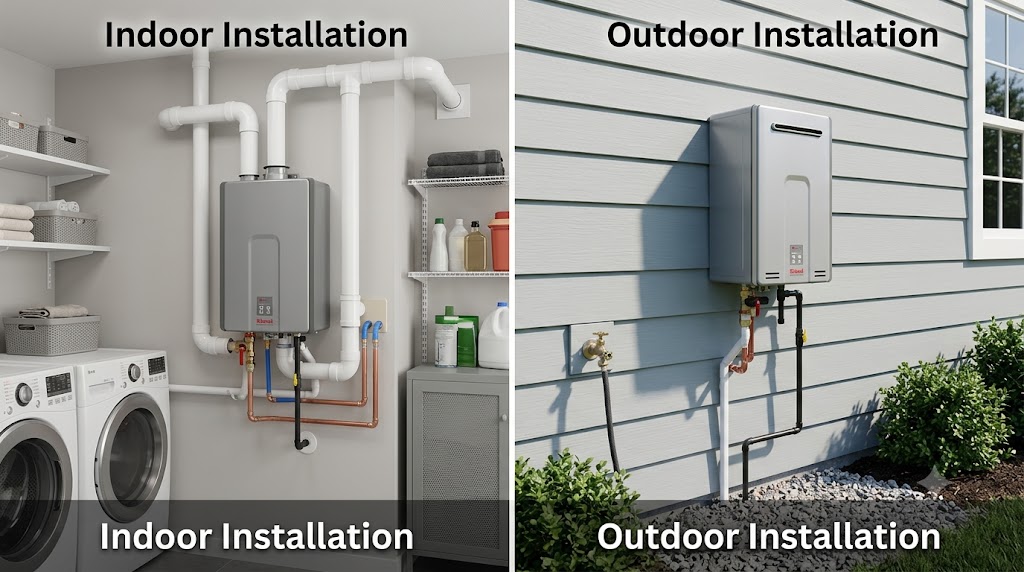
Rinnai’s own product listing for the RXP199iN specifically advertises “Indoor/Outdoor Installation” as a feature, a meaningful upgrade from the largely indoor-only installation of the discontinued RU199iN. That flexibility matters more than it might first appear, and it’s worth understanding before you decide where your new unit will actually live.
Rinnai’s current RXP199iN and RX199iN both support indoor or outdoor installation, giving buyers more placement flexibility than the older RU199iN, which was generally installed indoors. The right choice for your specific home depends on your climate, available wall space, venting logistics, and whether an outdoor location simplifies or complicates your overall installation cost.
Why Installation Location Matters
Indoor installations typically require a dedicated venting path to the exterior of your home, using PVC piping given these units’ condensing technology and correspondingly lower exhaust temperatures. This venting run length directly affects installation cost and complexity, a unit installed near an exterior wall generally has a simpler, cheaper venting path than one installed deep in a home’s interior.
Outdoor installations eliminate the need for interior venting runs entirely, since the unit exhausts directly at its outdoor location, which can meaningfully simplify installation in the right circumstances.
When Indoor Installation Makes Sense
Indoor installation protects the unit from direct weather exposure and temperature extremes, which can be a meaningful consideration in climates with severe winters or significant temperature swings. It also keeps the unit’s control panel and maintenance access points in a more convenient, climate-controlled location for servicing.
When Outdoor Installation Makes Sense
Outdoor installation can simplify venting logistics significantly, particularly in homes where running an interior vent path would require extensive work through finished walls or ceilings. It also frees up interior space, a genuine benefit in smaller homes or utility areas where every square foot matters.
Rinnai’s units designed for outdoor use include weatherproofing appropriate for exterior exposure, though specific climate suitability (particularly in areas with severe freeze risk) should be confirmed against the manufacturer’s specific outdoor installation guidance for your unit.
Freeze Protection Considerations
Outdoor installations in cold climates need proper freeze protection, typically built into the unit’s design but worth confirming specifically with your installer given your local climate’s severity. This is a genuine consideration that indoor installations don’t need to address in the same way, since the interior of a home maintains more stable temperatures.
Does Location Affect Installation Cost?
Generally yes, though the direction of that effect depends on your specific home’s layout. An outdoor installation might reduce interior venting work but could require additional weatherproofing or a more robust mounting setup. An indoor installation avoids exterior weather exposure concerns but may require a longer or more complex interior vent run depending on where the unit sits relative to an exterior wall.
Making the Right Choice for Your Home
If your climate experiences severe winters and you’re concerned about freeze risk, or if you prefer keeping equipment in a more protected, climate-controlled space, indoor installation is the more conservative choice. If you’re working with limited interior space or a home layout that would require extensive interior venting work, outdoor installation with the RXP199iN or RX199iN’s indoor/outdoor-rated design offers a genuinely practical alternative that wasn’t available with the older RU199iN.
For the full picture of what installation actually costs regardless of location, see our installation cost guide.
Rinnai RXP199iN Condensing Tankless Water Heater with Built-In Recirculation Pump - View on Amazon
The Bottom Line
Rinnai’s current RXP199iN and RX199iN both support indoor or outdoor installation, a genuine flexibility upgrade over the older RU199iN. Choose based on your climate’s freeze risk, available interior space, and which location simplifies your specific home’s venting logistics.
Frequently Asked Questions
Can the Rinnai RXP199iN be installed outdoors? Yes, Rinnai’s product listing specifically supports indoor/outdoor installation for the RXP199iN, offering more placement flexibility than older models like the RU199iN.
Was the RU199iN an indoor-only unit? Generally yes, the RU199iN was typically installed indoors, making the RXP199iN and RX199iN’s indoor/outdoor flexibility a genuine upgrade for buyers with specific placement needs.
Is outdoor installation cheaper than indoor installation? It depends on your specific home’s layout. Outdoor installation can reduce interior venting work, but may require additional weatherproofing, while indoor installation avoids weather exposure concerns but may need a longer interior vent run.
Does outdoor installation work in cold climates? Rinnai’s outdoor-rated units include freeze protection features, though specific climate suitability should be confirmed with your installer given your local winter severity.
What are the benefits of indoor installation? Indoor installation protects the unit from direct weather exposure and keeps maintenance access points in a more convenient, climate-controlled location.
What are the benefits of outdoor installation? Outdoor installation can simplify venting logistics and frees up interior space, particularly valuable in smaller homes or utility areas.
Does installation location affect venting requirements? Yes, indoor installations require a venting path to the exterior of the home, while outdoor installations exhaust directly at their outdoor location.
Should I choose indoor or outdoor installation for my Rinnai unit? This depends on your climate’s freeze risk, available interior space, and which location simplifies your home’s specific venting logistics, both options are valid depending on your circumstances.
Do both the RXP199iN and RX199iN support outdoor installation? Yes, both current Rinnai models in this capacity class support indoor or outdoor installation, according to their official product listings.
Is professional installation required regardless of location? Yes, given the gas line, venting, and electrical work involved, professional installation is recommended for both indoor and outdoor placements, for both safety and warranty reasons.
References
- Rinnai official product specifications for the RXP199iN and RX199iN, including installation flexibility, accessed July 2026: https://www.amazon.com/s?k=Rinnai+RXP199iN
- Rinnai official installation guidance, accessed July 2026: https://www.rinnai.us