
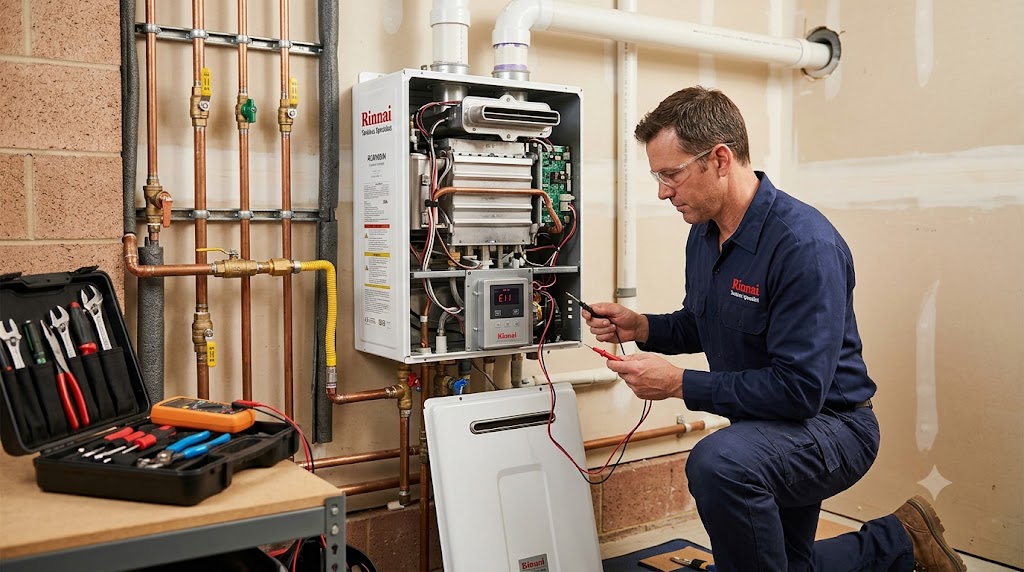
A sudden drop in hot water temperature mid-shower, or a unit that simply won’t fire up on a cold morning, sends most homeowners straight to worry about an expensive repair. In reality, many common tankless water heater issues have simple, identifiable causes and straightforward fixes.
The most common Rinnai tankless water heater problems include mineral scale buildup reducing performance, inlet filter clogs restricting flow, gas supply issues preventing ignition, and flow rate below the unit’s minimum activation threshold, most of which have direct, addressable fixes without requiring a full service call. Knowing what to check first can save you both time and money.
Problem: Water Isn’t Getting Hot Enough
This is often caused by mineral scale buildup on the heat exchanger reducing heating efficiency, particularly in homes overdue for their annual descaling. See our [descaling how-to guide] for the full process to address this directly.
It can also occur if your hot water demand exceeds the unit’s capacity at your home’s specific temperature rise requirement, worth reviewing in our [sizing guide] if this is a recurring issue rather than a new development.
Problem: Unit Won’t Fire Up At All
Check that gas supply is fully open and that the unit has power. If both check out, low flow rate below the unit’s minimum activation threshold (often around 0.5 GPM) can also prevent ignition, this can happen if a fixture’s flow restrictor is significantly reducing water flow.
Problem: Fluctuating Water Temperature
Often related to simultaneous demand from multiple fixtures exceeding available flow capacity at your home’s temperature rise, or in some cases a partially clogged inlet filter restricting consistent flow. Cleaning the inlet filter is a simple first step worth trying before assuming a larger problem.
Problem: Unusual Noises During Operation
Some operational sound is normal for tankless units, but noticeably increased noise can indicate mineral scale buildup affecting the heat exchanger, making this another situation where a descaling session is often the appropriate fix.
Problem: Error Codes Displayed
Rinnai units display specific error codes corresponding to different issues, ranging from ignition problems to flow sensor issues to venting blockages. See our [full error code guide] for a breakdown of what specific codes mean and how to address them.
Problem: Reduced Performance in Winter
Colder incoming water temperature in winter increases the temperature rise the unit needs to achieve, which can reduce maximum flow rate at full hot water temperature compared to summer months. This is a normal characteristic of tankless technology rather than a malfunction, and it’s worth understanding when sizing your unit for year-round performance.
When to Call a Professional
If basic troubleshooting like checking gas supply, power, and the inlet filter doesn’t resolve the issue, or if you see an error code you’re not confident interpreting correctly, it’s time to call a licensed professional rather than continuing to troubleshoot on your own, particularly given the gas and electrical components involved.
Rinnai RXP199iN Condensing Tankless Water Heater with Built-In Recirculation Pump - View on Amazon
The Bottom Line
Most common Rinnai tankless water heater problems, from reduced hot water temperature to ignition failures, trace back to mineral scale buildup, filter clogs, or flow rate issues, all of which have straightforward fixes. Know the basic troubleshooting steps before assuming you need a costly service call.
Frequently Asked Questions
Why is my Rinnai tankless water heater not getting hot enough? Often mineral scale buildup on the heat exchanger reducing heating efficiency, particularly if the unit is overdue for its annual descaling.
Why won’t my tankless water heater fire up? Check gas supply and power first, then consider whether flow rate is below the unit’s minimum activation threshold, often around 0.5 GPM.
Is fluctuating water temperature a sign of a serious problem? Not always, it’s often related to simultaneous demand from multiple fixtures or a partially clogged inlet filter, both addressable without a major repair.
What does it mean if my tankless heater makes unusual noises? Increased operational noise can indicate mineral scale buildup on the heat exchanger, making a descaling session a reasonable first troubleshooting step.
Why does my tankless water heater perform worse in winter? Colder incoming water increases the temperature rise needed, which can reduce maximum flow rate at full hot water temperature, a normal characteristic rather than a malfunction.
What should I check before calling a professional? Gas supply, power connection, and inlet filter condition are all simple checks worth doing yourself before scheduling a service call.
Do error codes always mean something serious is wrong? Not necessarily, codes range from minor issues like flow sensor sensitivity to more significant problems, so checking your specific code against the manual is the right first step.
Can a clogged inlet filter cause multiple different symptoms? Yes, a clogged filter can contribute to both fluctuating temperature and reduced flow, making it one of the first things worth checking during troubleshooting.
How often do these common problems typically occur? With regular annual maintenance, most owners experience these issues infrequently, they’re more common in units that are overdue for descaling or filter cleaning.
Should I attempt to fix gas or electrical issues myself? No, gas and electrical troubleshooting beyond basic checks like confirming supply and power should be left to a licensed professional given the safety risk involved.
References
- Rinnai official troubleshooting and maintenance guidance, accessed July 2026: https://www.rinnai.us
- Rinnai official product specifications for the RXP199iN, accessed July 2026: https://www.amazon.com/s?k=Rinnai+RXP199iN