
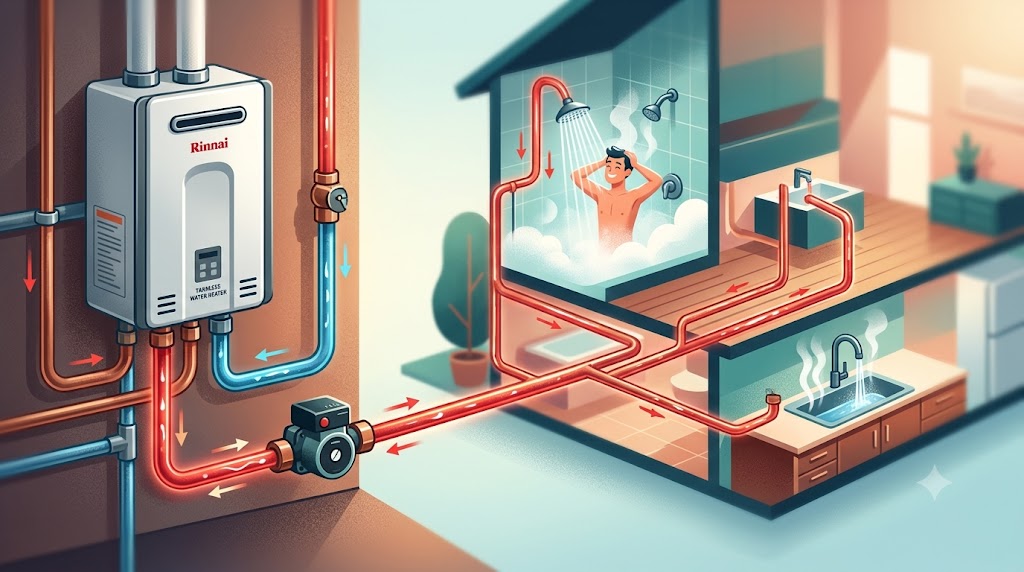
Standing at the shower waiting thirty seconds or more for hot water to finally arrive is one of the most common complaints about tankless water heaters, especially in homes with long pipe runs between the unit and fixtures. Rinnai’s recirculation pump technology exists specifically to solve this problem.
The Rinnai RXP199iN includes a built-in recirculation pump, which keeps hot water available closer to your fixtures and significantly reduces the wait time for hot water to arrive, a genuine upgrade over the discontinued RU199iN, which did not include this feature built in. This is one of the most meaningful practical differences between the two units.
How Recirculation Pumps Work
A recirculation pump moves hot water through your home’s plumbing on a schedule or on demand, keeping water in the pipes closer to hot temperature so it doesn’t need to travel the full distance from your water heater every time you turn on a tap. Without recirculation, water sitting in the pipes cools between uses, and you wait for that cooled water to clear before hot water arrives.
Built-in recirculation, like what the RXP199iN offers, integrates this function directly into the unit rather than requiring a separate add-on pump system.
Built-In vs Add-On Recirculation Systems
The RXP199iN’s built-in pump is designed and calibrated specifically for that unit, generally offering simpler installation and more integrated control than retrofitting a separate recirculation pump onto a unit that wasn’t designed with one, like the older RU199iN.
Add-on recirculation systems exist and can be added to units without built-in pumps, but they typically involve additional installation complexity, a dedicated return line in some configurations, and separate control logic that isn’t as tightly integrated as a factory-built solution.
Does Recirculation Save Water?
Yes, meaningfully. Reducing the time spent running a tap while waiting for hot water directly reduces wasted water, an effect that compounds across every hot water use in a household over time. This is a genuine efficiency benefit beyond simple convenience.
Does Recirculation Affect Energy Use?
Recirculation pumps do use some electricity to operate, and depending on how frequently the system cycles, there can be a modest increase in standby energy use compared to a unit without recirculation. Most modern recirculation systems, including Rinnai’s, include smart scheduling or demand-based operation to minimize this tradeoff rather than running continuously.
Is Recirculation Worth It for Your Home?
Homes with long pipe runs between the water heater and frequently used fixtures, or households that place a high value on immediate hot water access, benefit the most from recirculation. Homes with a water heater located close to most fixtures may notice less practical difference, since wait times were already short to begin with.
If reducing wait time for hot water matters to you, the RXP199iN’s built-in pump is worth factoring into your decision between it and the non-recirculation RX199iN, since retrofitting a pump later adds cost and complexity you can avoid by choosing the right model upfront.
Rinnai RXP199iN Condensing Tankless Water Heater with Built-In Recirculation Pump - View on Amazon
The Bottom Line
The RXP199iN’s built-in recirculation pump reduces wait time for hot water and saves water in the process, a genuine upgrade over the older RU199iN’s lack of built-in recirculation. It’s especially worth prioritizing in homes with long pipe runs or households that value immediate hot water access.
Frequently Asked Questions
Does the Rinnai RXP199iN have a built-in recirculation pump? Yes, this is one of its standout features and a genuine upgrade over the discontinued RU199iN, which did not include a built-in pump.
What does a recirculation pump actually do? It keeps hot water available closer to your fixtures, reducing the wait time between turning on a tap and hot water arriving.
Does a recirculation pump save water? Yes, by reducing the time spent running a tap while waiting for hot water, which reduces wasted water across every use in a household.
Does recirculation increase my electricity bill? Modestly, recirculation pumps use some electricity to operate, though smart scheduling or demand-based operation in modern systems minimizes this tradeoff.
Can I add a recirculation pump to a unit that doesn’t have one built in? Yes, add-on recirculation systems exist, though they generally involve more installation complexity than a factory-built system like the RXP199iN’s.
Is a built-in recirculation pump better than an add-on system? Generally yes, built-in systems are designed and calibrated specifically for that unit, typically offering simpler installation and tighter integrated control.
Who benefits most from recirculation pump technology? Homes with long pipe runs between the water heater and frequently used fixtures, and households that place high value on immediate hot water access.
Does the RX199iN include a recirculation pump? No, the RX199iN does not include a built-in recirculation pump, this feature is specific to the RXP199iN in Rinnai’s current comparable lineup.
Does recirculation affect the unit’s lifespan? Not significantly on its own, though as with any additional component, proper maintenance of the pump system supports its long-term reliability.
Should I choose the RXP199iN specifically for the recirculation pump? If reducing hot water wait time and water waste matters to your household, yes, this is a meaningful practical reason to choose it over the non-recirculation RX199iN.
References
- Rinnai official product specifications for the RXP199iN, including built-in recirculation pump details, accessed July 2026: https://www.amazon.com/s?k=Rinnai+RXP199iN
- Rinnai official product information, accessed July 2026: https://www.rinnai.us