
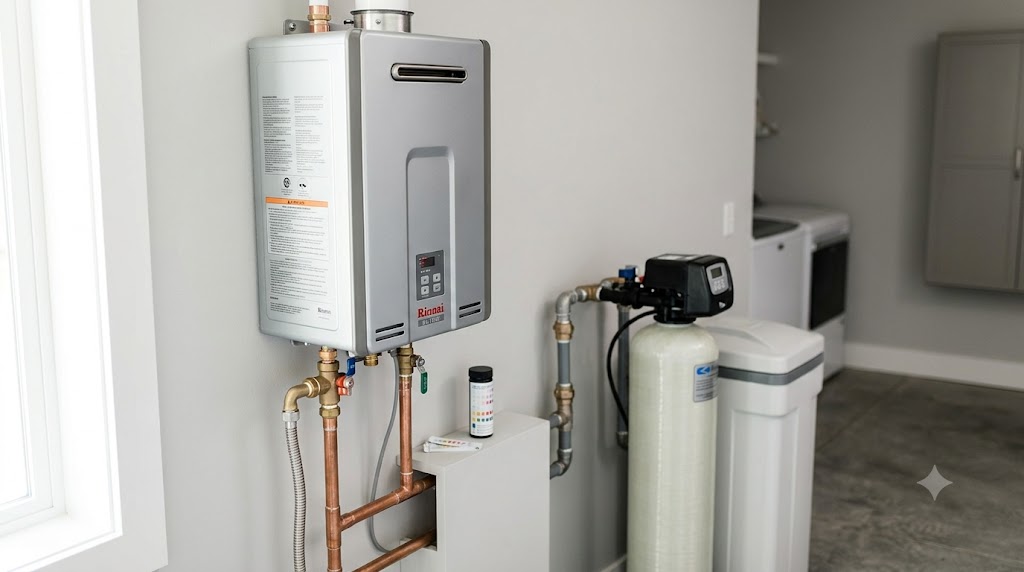
A homeowner in a hard water area, already budgeting for a new tankless water heater, wonders if they now also need to add a water softener to the project to protect their investment. It’s a reasonable question, and the honest answer depends heavily on your local water hardness.
A water softener isn’t strictly required to run a Rinnai tankless water heater, but in homes with hard water, adding one meaningfully reduces mineral scale buildup on the heat exchanger, extending the interval between required descaling maintenance and potentially supporting a longer unit lifespan. The harder your water, the more this investment tends to pay off.
How Hard Water Affects Tankless Units Specifically
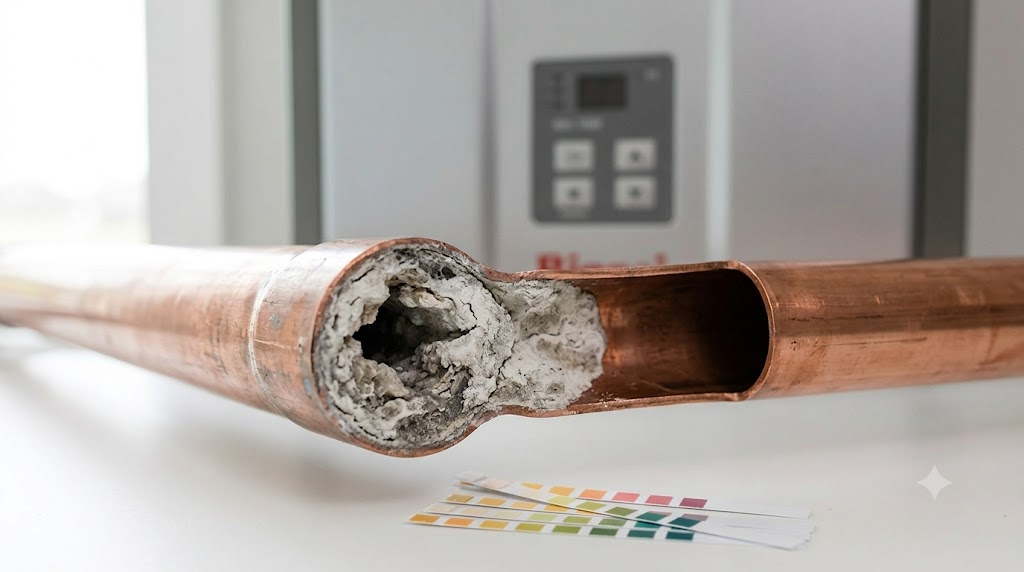
Hard water contains higher mineral content, primarily calcium and magnesium, which precipitate out as scale when water is heated. Since tankless units heat water on demand across a heat exchanger, this scale accumulates directly on the heat transfer surface over time, gradually reducing efficiency if not addressed through regular descaling.
Homes with genuinely hard water see this buildup happen faster, requiring more frequent maintenance to keep the unit performing at its rated efficiency.
What Water Softeners Actually Do
A water softener uses an ion exchange process to remove calcium and magnesium from water before it enters your home’s plumbing, replacing them with sodium or potassium ions that don’t form scale in the same way. This directly reduces the mineral load reaching your tankless water heater’s heat exchanger.
When a Water Softener Makes the Most Sense
If your local water hardness tests above roughly 7 grains per gallon, a water softener is generally worth serious consideration alongside a tankless water heater investment, since it meaningfully reduces the frequency of required descaling maintenance and protects the heat exchanger from accelerated wear.
When You Might Skip It
Homes with genuinely soft water, or those willing to commit to more frequent descaling maintenance as an alternative, can reasonably operate a tankless unit without a whole-home softener, particularly if the added cost and maintenance of a softener system isn’t appealing.
Alternative: Scale Reduction Systems
Some homeowners opt for a scale reduction or conditioning system instead of a traditional salt-based softener, these use different technology (such as template-assisted crystallization) to reduce scale-forming tendency without adding sodium to your water supply. These can be a reasonable middle-ground option worth researching if a traditional softener doesn’t fit your household’s needs.
The Bottom Line on Cost vs Benefit
Weigh the upfront and ongoing cost of a water softener system against the value of extended intervals between descaling maintenance and potentially longer heat exchanger lifespan. In genuinely hard water areas, this calculation often favors adding a softener, in moderate or soft water areas, committing to your [regular maintenance schedule] alone may be sufficient.
Rinnai RXP199iN Condensing Tankless Water Heater with Built-In Recirculation Pump - View on Amazon
Frequently Asked Questions
Do I need a water softener to use a Rinnai tankless water heater? Not strictly, but in hard water areas, adding one meaningfully reduces scale buildup and extends the interval between required descaling maintenance.
How does hard water affect a tankless water heater? Mineral content precipitates as scale on the heat exchanger when water is heated, gradually reducing efficiency if not addressed through regular descaling.
What water hardness level justifies adding a softener? Generally above roughly 7 grains per gallon, a water softener becomes worth serious consideration alongside a tankless water heater investment.
Can I just descale more often instead of adding a softener? Yes, this is a reasonable alternative for homeowners who prefer not to add a softener system, though it does require more frequent maintenance commitment.
Are there alternatives to traditional salt-based softeners? Yes, scale reduction or conditioning systems using technology like template-assisted crystallization offer an alternative without adding sodium to your water.
Does a water softener extend my tankless unit’s lifespan? It can, by reducing scale buildup on the heat exchanger, a softener supports the conditions that contribute to reaching or exceeding typical expected lifespan.
Is a water softener a good investment alongside a new tankless heater? In hard water areas, generally yes, the reduced maintenance frequency and protection for your heat exchanger investment often justify the added cost.
How do I know my local water hardness level? Home water hardness test kits are widely available, or you can check with your local water utility, which often publishes hardness data for your area.
Does a water softener affect my tankless water heater’s warranty? Check your specific unit’s warranty terms, though using a softener in hard water areas generally supports rather than conflicts with proper unit care.
Should I install a softener before or after my tankless water heater? Either order works, but if you know you have hard water, planning for both together during your installation project can simplify logistics.
References
- Rinnai official maintenance guidance referencing water hardness considerations, accessed July 2026: https://www.rinnai.us
- Rinnai official product specifications for the RXP199iN, accessed July 2026: https://www.amazon.com/s?k=Rinnai+RXP199iN